At 7:46 a.m. on November 8, 2018, the Camp Fire jumped the Feather River in Northern California. Driven by 40-mile-an-hour winds and months of desiccating drought, it moved so fast that bulldozers racing to carve a break in the forest never reached the line. Within four hours, the town of Paradise lay in smoking ruin. Eighty-five people were dead, nearly 19,000 structures had vanished, and a century of “no-burn” policy lay exposed as the true arsonist.
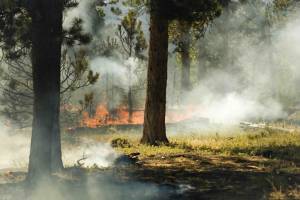
Three hundred miles north, on a bend of the Klamath River, members of the Yurok Tribe were lighting a very different fire. Carrying drip torches and cedar boughs, they walked slowly through a hazel thicket. Their flame stayed knee-high—quiet, steady, almost meditative. It cleared brush, opened space for huckleberries, and left behind a mosaic of black soil and emerald moss.
Cultural burns like that one, banned by federal edict for most of the 20th century, are returning because Tribal leaders kept insisting on an older truth: Fire is not a menace to be eradicated; it is a relationship to be managed. “We coexist with fire; we need fire and fire needs us. It’s a different way of looking at the forest,” said Amy Cardinal Christianson, an Indigenous fire expert in Canada.

Watching those two infernos—one apocalyptic, one restorative—feels to me like reading twin case studies on leadership. The first shows what happens when a system treats every spark as an emergency to stamp out. The second shows what becomes possible when stewards learn to invite small, purposeful heat. Swap “flame” for “disagreement,” and you have a parable for modern organizations and the societies they inhabit.
When the office smolders
It is estimated that American employers now lose more than $2.7 billion every day to distraction, absenteeism, and turnover triggered by uncivil or unresolved conflict. Because the costs accumulate in missed deadlines and silent resentment, executives rarely perceive the danger until their smoldering issues burst into flames on social media platforms like X—and they discover their brand in ashes. The impulse in that moment is always suppression: tighten nondisclosure agreements, send cease-and-desist letters, launch a “values” campaign.
Decades of research in conflict resolution—and a growing body of wildfire science—suggest that the reflex is backward.
Conflict, like fire, is inevitable and can be invaluable. The question is whether leaders are willing to stage it on their own terms or endure it on nature’s. That conviction led my team at Columbia University to develop a protocol for addressing significant conflict-related crises we call RESCUE, built on three unlikely intellectual parents: Indigenous fire stewardship; the LCES safety system invented by legendary smokejumper Paul Gleason; and our own research on Conflict-Intelligent Leadership.
Grounded wisdom
The Yurok Tribe’s approach to controlled burns challenges conventional firefighting wisdom by deliberately welcoming fire as an ally rather than treating it strictly as a threat. In contrast to standard firefighting practices—which prioritize suppression and avoidance—the Yurok actively invite periodic, small-scale fires onto the landscape. They view fire as a necessary and beneficial force, capable of renewing ecosystems, preserving cultural traditions, and reducing the catastrophic buildup of flammable material.
Even more surprising is the profound cultural humility embedded in their method: Instead of attempting to control fire absolutely, the Yurok partner with it, respecting its agency and unpredictability. Their strategy hinges on deep, generational knowledge of landscapes and weather conditions, coupled with patience and restraint—qualities notably absent in conventional approaches that often rely on forceful intervention and technological dominance.
Applied metaphorically to managing highly destructive social conflicts, the Yurok philosophy underscores the value of proactively addressing tensions before they escalate into uncontrollable crises. Just as controlled burns prevent catastrophic wildfires, intentional and skillful confrontation of conflict can reduce harmful buildup of grievances, clarify misunderstandings, and strengthen relational resilience.

That demands deep understanding of the underlying dynamics, thoughtful preparation, and a willingness to engage constructively and courageously with potentially volatile issues. Doing so fosters healthier, more adaptive organizations and communities, capable of sustaining vitality through periods of stress and renewal.
Getting conflict-smart
Drawing on 30 years of research on conflict from psychology, peace and conflict studies, and complexity science, Conflict-Intelligent Leadership (CIQ-L) offers a comprehensive framework for managing disputes of all kinds that can be broken down into five nested layers of competencies:
- self-awareness and self-regulation,
- the social dynamics of conflict,
- situational adaptivity,
- the capacity to employ structural leverage, and
- ultimately the ability to read and work with the broader systems that breed conflict.
It’s a far cry from standard conflict-resolution playbooks. This model doesn’t just seek to manage disputes—it encourages leaders to prepare for them and transform them into generative forces, much like firefighters learn to read and control wildfires rather than merely suppress them. By mastering this layered approach, leaders can learn to navigate even the most fractious divides—whether they’re facing racially charged campus protests, internal workplace rebellions, or ideological rifts in communities.
Laying groundwork
This vision of conflict as dynamic, fluid, and potentially constructive is a radical departure from business-as-usual. It suggests that true leadership in this era of permacrisis doesn’t mean avoiding conflict at all costs—it means becoming more adept at employing a set of basic conflict-intelligent principles that allow leaders to work with the energy and power inherent to conflict.
- For example, CIQ leaders know to lay the groundwork for conflict management by honing the necessary skills and nurturing supportive networks to establish a sturdy foundation for turbulent times.
- When tensions arise, they start smart by drawing on the people, processes, and practices that already foster constructive dialogue.
- As conflicts shift and evolve, they master conflict adaptivity—anchoring their efforts to a clear vision for the future while flexibly pivoting strategies to stay aligned with changing dynamics.
- They also learn to optimize opposing forces, strategically weaving together seemingly contradictory approaches—like blending fierce advocacy with collaborative bridge-building—to generate more creative solutions.
- When conflicts get entrenched, instead of getting mired in the heat of disputes, CIQ leaders know how to leverage the context, zooming out to understand how surrounding forces shape conflicts and then working to shift those conditions.
- Ever-vigilant, they remain opportunistic, seizing on pivotal moments—like a sudden emotional breakthrough or an overlooked ally—to create opportunities that conventional methods might miss.
- Ultimately, they play the long game, patiently nurturing incremental changes in norms, practices, and underlying narratives to unlock new possibilities to learn from and leverage conflict.
Together, these CIQ principles create a holistic approach that transforms conflict from a destructive force into an engine for resilience, learning, and forward movement. Nevertheless, they take time to learn and to implement.
So, what is a leader to do when conflicts spark and burn without notice and then seem to take on a life of their own?
The man who invented don’t-get-killed
On June 26, 1990, Paul Gleason was digging a handline on Arizona’s Dude Fire when the wind shifted and flames exploded 60 feet overhead. He glanced at the treetops, felt the downdraft on his neck, and yelled to his crew: Drop the tools, run to the clearing.
Every firefighter with him lived. Two weeks later, in a hotel bar still smelling of smoke, Gleason sketched four words on a napkin: Lookouts, Communications, Escape routes, Safety zones. LCES became the first universal checklist for wildland crews. Establish it—or refuse the assignment.
Gleason’s insight was not radical complexity; it was radical clarity. Everyone on the line, from rookie to superintendent, had to know the same four things.
When my colleagues and I began mapping organizational blowups, we found an uncanny parallel. Teams that failed explosively were not missing nuance; they were missing common facts. No one was assigned to watch the interpersonal weather. No one trusted the radio traffic. No one knew where to turn when the conversation turned toxic. They lacked their own version of LCES.
A six-phase conflict drill for human systems
RESCUE translates those fire rules from the field for combustible forms of social conflict. It recommends that leaders facing conflict “firestorms” today move through six recurring disciplines—Radical Clarity, Effective Communication, Strategic Adaptivity, Conflict-Safe Environment, Unified Structures, Enduring Resilience. Each is mundane in isolation; together they amount to a rehearsal for the blaze that is coming.
- Radical Clarity begins where Gleason began: Station a lookout. That might be a rotating “meeting anthropologist” whose only job is to name the emotion in the room; or a natural-language algorithm that scans Slack for sarcasm spikes. The purpose is not to punish but to see the smoke early. This phase also requires leaders to be ruthlessly clear about their own biases and blind spots—and those of their team: anything in the way of an accurate take on trouble ahead.
- Effective Communication borrows from Tylenol’s 1982 catastrophe. When cyanide-laced capsules killed seven Chicago residents, Johnson & Johnson’s CEO, James Burke, flooded the nation with unfiltered facts and yanked 31 million bottles from shelves. He obeyed a single principle: Tell the truth faster than rumor can draft its own narrative. The need to have timely, transparent communication both within the organization and with the public is paramount.
- Strategic Adaptivity recalls that fire crews never rely on one escape route. In crises, they must always have Plans B, C, and D. They cultivate flexibility in themselves and their teams, and they aren’t afraid to change course to prevent a conflict from spiraling or to seize an unexpected opportunity that conflict presents. Adaptive leaders keep multiple conflict tactics—control, domination, facilitation, mediation, avoidance—alive at once and switch without ego when conditions demand.
- Conflict-Safe Environment is the meadow before the torch. CIQ leaders create cultures where dissent and debate are welcome, and people can disagree without fear, converting conflict into creativity and energy for change. Google’s Project Aristotle spent two years chasing the secret of effective teams and discovered what Yurok elders already knew: People must believe they can speak up and call out without humiliation. This is the safety valve for releasing pressure before it’s too late.
- Unified Structures embed the lessons. The Yurok have established a Cultural Fire Management Council; smokejumpers have LCES laminated on their helmets. Companies institutionalize conflict intelligence when bonus formulas, performance reviews, and onboarding modules reward conflict-intelligent behavior. Absent that, the wisdom retires with its champion.
- Enduring Resilience is what grows in the ash. CIQ leaders focus on turning crises into breakthroughs and ensuring the resolution of conflict leaves the organization more innovative, cohesive, and resilient than before. Sliced bread, Post-it Notes, the COVID-era transformation of Microsoft into a “learn-it-all” enterprise—each was a seed that grew from the heat of hard times and crises and paid dividends.
How to burn on purpose
In practice, staging conflict feels less like a vision quest and more like infrastructure work. Consider Adobe. In 2012, the company replaced its annual performance appraisal—dreaded, secretive, ratings-driven—with a quarterly “check-in.” Managers were trained to ask three questions: What should you keep doing, stop doing, start doing? Attrition dropped 30% in two years; patent filings rose. The unsung engine was candor with frequency. Tension never piled up long enough to catch Diablo winds.
Or look at a Midwestern children’s hospital that adopted a “speak-up badge”: Any nurse could tap her ID card and freeze a surgery if something looked wrong. Complication rates fell 13%. The badge was a handheld safety zone.
Even small rituals matter. At a Seattle gaming studio, every design sprint closes with a “heat map.” Participants place sticky dots on poster paper: green for energizing disagreements, red for draining ones. Red clusters trigger a 48-hour “spot burn”: a facilitated meeting whose entire agenda is naming what went wrong.
The paradox is that crisis prevention like this feels artificial—until the blowup comes. Then the team with an escape route looks prescient, and the team without one looks negligent.
The politics of good fire
The need for controlled burns extends far beyond the C-suite. Universities wrestling with speech controversies, school boards split over curriculum, democracies confronting disinformation—all face a version of the same dilemma: suppress heat or harvest it.
When students at the University of Chicago demanded trigger warnings on all potentially distressing material, President Robert Zimmer issued a blunt letter defending “discomfort” as a condition of learning. Critics called the stance insensitive; advocates hailed it as a line in the sand for academic freedom. Either way, the letter forced an explicit negotiation of values before resentment smoldered into a conflagration. The university had, in effect, dug its firebreak early.
Compare that with Evergreen State College’s 2017 eruption over a day of absence for white faculty. Conflict bypassed any formal containment line; viral video became policy overnight, enrollment cratered, and the college only recently returned to pre-crisis numbers. The timing differed by weeks; the cost differed by millions.
Political culture is beginning to notice. Maine’s bipartisan attempt to legislate Citizen Assemblies—randomly selected panels that deliberate hot-button issues—echoes Indigenous councils where dissent is institutionalized, not shamed. In a nation stalking toward what some scholars call cold civil war, the practice of micro-burns may be our best fire insurance.
What grows after
Suppression feels compassionate: Why let people suffer the burn?
But the Camp Fire’s lesson is brutal. Every decade that Smokey the Bear kept California “safe” from flame left an acre-deep quilt of tinder. One spark turned that quilt into a crematorium. In human affairs, the accumulation is moral: unresolved abuse claims, buried racial trauma, muttered distrust of institutions. Denying heat is cheaper today but murderous tomorrow.
The alternative—lighting small, intentional fires carefully—demands courage. It also demands foresight and a blueprint. Without those, a “frank conversation” can become a bonfire of grievance. That is why RESCUE, for all its academic lingo, is a checklist first. Appoint the lookout. Test the radio. Mark the meadow. Agree on two exits. Then strike the match.
A year after the Yurok burn, thimbleberries blazed red and hazelnut saplings stood hip-high. A teenage basket maker clipped shoots into a willow-bark pouch.
Leaders who learn to burn well make the same wager: that the next conflict is not a threat to survival but a nutrient cycle to cultivate. In an era of algorithmic outrage and rolling climate disaster, that wager may be the slender difference between civic collapse and civic renewal.
Either way, the forest will burn. Our only choice is whether the story ends like Paradise—or like the ridge where the hazel came back.


Comments