Helping Teens Recognize Our Potential for Change
In this video from our Bridging Differences for Parents and Teens series, learn how particular mindsets can foster openness to interactions with people across differences.
Transcript
Scroll down for a transcription of this video.
Having a mindset that people are mostly set in their ways can make us believe that it isn’t worthwhile to meet or interact with people who might have attitudes that are different from our own. This kind of unchangeable mindset can lead us to view all people who have negative attitudes about others as forever “bad.” On the other hand, people who have a mindset that peoples’ attitudes can change may be more open to interacting with people who are different from them—even though it could be really difficult.
How can particular mindsets help teens to learn how to bridge differences? A changeable mindset can help your teen recognize that people with prejudiced attitudes can learn from their experiences and challenges, encouraging them to meet and interact with people from different groups.
In this video, Olena takes a first step to help her teen Tymofi recognize our potential for change. This activity involves learning about the science of brain development and how research shows that attitudes–including prejudices about people–can also change even after they develop.
Learn more about this "Helping Teens Recognize Our Potential for Change" practice and others with step-by-step guidance at our library of research-based practices to support teens to learn how to bridge differences.
(Additional Resources: Learn more about what parents and schools can do about bullying.)
This is the third video in our "Parenting to Nurture Skills to Bridge Differences" series.
Facilitator | Dhaarmika Coelho, Founder of Camp Kindness Counts
Production Company | Anaconda Street Productions
Partners on the Bridging Differences Parenting Practices | Generation Citizen and Making Caring Common
Transcription:
OLENA: Hi, my name is Olena. And my son, Tymofiy, he's 15. He's a really good and outgoing boy.
TYMOFIY: My name is Tymofiy. Here's a little bit about myself. I love volleyball, but I play it for fun, not competitive. I play video games a ton. I play Minecraft, Fortnite-- all of that.
[PIANO PLAYING]
When I make music or when I play, it's like it fills me with happiness. I'm from Ukraine, and it's been difficult. When I first came from Ukraine, it was hard because I didn't know how to speak English at all. In first grade, I got bullied by guys who were twice the size of me.
OLENA: Honestly, for me it was so painful.
TYMOFIY: And I cried basically all day until my mom comforted me, and my dad. My parents and I have a very strong bond. They taught me about forgiveness.
OLENA: Forgiveness is very important to us, to our family.
DHAARMIKA: Olena and Tymofiy hi.
TYMOFIY: Hello.
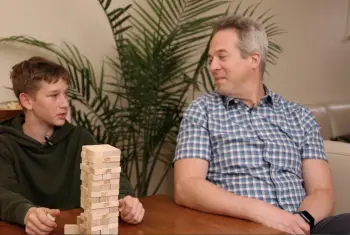
DHAARMIKA: Elena takes a first step to help her teen Tymofiy recognize our potential for change. This activity involves learning about the science of brain development, and how research shows that attitudes-- including prejudices about people-- can also change even after they develop.
A changeable mindset can help your teen respond with openness to situations or people, rather than rely on stereotypes, and can also help teens view another person's negative biases about others as potential for growth and transformation, rather than view another person as is hopeless and unworthy. This perspective can lead your teen to act with courage and compassion rather than despair, vengeance, or retaliation when they encounter prejudice in other teens and adults.
When you moved from one country to another country, you were both so open to learning from others, and recognize that there is a lot to learn from people who are different from yourself. When we take the time to practice these strengths that we have, like forgiveness and compassion, our brain is actually growing and becoming a little bit more like flexible.
Olena and Tymofiy learned about neuroplasticity-- the brain's ability to grow and change based on the experiences that you have.
So, for example, it takes a lot of practice to learn how to ride a bicycle. So initially, you're riding the bicycle and maybe you get-- OK, there's some connections happening in your brain. Oh yes, I have to move my leg and I have to move this leg too and keep on. And then the more you do it, the more you ride your bicycle, your brain starts to remember those patterns. It starts to remember the behavior, the things that you're doing that it takes to ride a bicycle. And those connections happen in your brain, more and more rewiring.
Well, new research and science has shown it's not just for those motor exercises that our brain changes and grows. Also, it helps when we want to develop new attitudes about yourself, or even someone who may have a different life experience from your own. Tymofiy, in this activity, I would like you, if you could think about that, maybe that you might have met someone who has a different life experience, a different cultural identity from you, and maybe how your mindset or feelings might have changed after getting to know them, or after practicing empathy or compassion or curiosity.
TYMOFIY: This happened to a week ago. So there was a girl that was annoying me, a lot. And then I came up to her and we just started talking and I figured out she had some problems in her family. And she's actually a very kind and lovely person, a very funny person. And she just stopped annoying me and we became good friends.
DHAARMIKA: Oh, wow. Yeah.
OLENA: So this is a good example. how it works.
DHAARMIKA: Yeah, being curious, practicing forgiving, and showing you how you were able to bridge those differences in perception that you had about about you didn't really know. Was it hard?
TYMOFIY: When I started talking to her at first, yeah.
DHAARMIKA: Yeah. It's hard. Sometimes, bridging differences can be tough. It can be really, really challenging. But it sounds like you wanted to try. And so you tried and it was a little bit tough. And then did it get a little easier?
TYMOFIY: It got lighter, yeah.
DHAARMIKA: Awesome.
OLENA: Over time, we can change our behavior, our attitudes and perspectives. I would love to continue this conversation with Tymofiy. Tymofiy, I appreciate you for doing this and sharing your feelings. And honestly, I'm so proud of you. I believe that you make a big impact on society, and you will build more positive attitudes and impressions. Thank you so much.
OLENA: Thank you, mom, for supporting me. I wouldn't survive without you. You're the best mom.
DHAARMIKA: Oh.
DHAARMIKA: I love you.
DHAARMIKA: Teens mindsets can influence how they understand and respond to personal and social challenges, including when they or their peers have prejudiced attitudes.
Comments