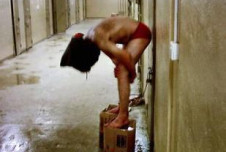
Thirty years after the Stanford Prison Experiment ended abruptly, its findings resonated in the photos that escaped from Abu Ghraib prison: prisoners with hoods over their heads, put in humiliating positions; young guards pandering to the camera as they abused their subjects. The soldiers at Abu Ghraib were ordinary young men and women thrown into an environment in which abusive and degrading behavior became the norm.
But if Abu Ghraib revealed the banality of evil, it also exposed the banality of heroism. While the culture of the prison persuaded everyone else to perform or accept prisoner abuse, Sergeant Joseph Darby, a 24-year-old Army reservist, saw what his fellow soldiers were doing, and he acted to stop it.
Another soldier gave Darby a CD with photos of the abuses on them. “It was amusing at first,” he said in a recent interview with ABC News. “[But] after I’d looked at all the pictures, I realized I had a decision to make.”

Darby decided to turn in the CD to a superior. The military initiated an investigation but didn’t disclose who at Abu Ghraib had reported the abuses. For a month and a half, Darby lived in a perpetual state of fear, hoping his identity as the whistle blower wouldn’t be revealed, sleeping with a gun under his pillow. But he remained convinced that he had done his duty as a solider.
“[The abuse] violated everything I person- ally believed in and all I’d been taught about the rules of war,” he said during a pretrial hearing for one of the perpetrators. “It was more of a moral call.”
In the two years since the photos first came to light, eight soldiers have been punished for their role in the abuses, and Darby has been hailed as a hero. He has also been vilified by people in and out of the military. Vandalism and threats against his wife and mother forced them to move from their Pennsylvania home; Darby went into protective custody, and now lives in hiding. Still, he has expressed no regrets about blowing the whistle on Abu Ghraib.
“It had to be done,” he told ABC News.


Comments