According to Tal Ben-Shahar, happiness is a skill you can develop no matter how happy you currently are—a belief conveyed by the title of his new book, Happier. This is a more hopeful notion than, say, positive psychology founder Martin Seligman’s seminal concept of “authentic happiness,” which suggests that some kinds of happiness are better than others. And it is a more helpful insight than Daniel Gilbert’s in Stumbling on Happiness, in which he argues that we’re prone to misjudge what we can do to make ourselves happier.
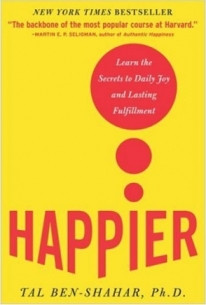
Happier also occupies more of a self-help niche in the field of research-based happiness books. Looking for a sweeping history of happiness? Try Happiness by Darrin McMahon. Want philosophical? Definitely go for Jonathan Haidt’s Happiness Hypothesis. An easy review of the science and theory of happiness? That would be Dan Nettle’s Personality. But if you need specific exercises, meditations, and suggestions for “Time-Ins” (topics for reflection), then Ben-Sharar’s Happier is the book for you. Most happiness books by positive psychologists largely refer to the same studies and scientific principles; this one adds Ben-Sharar’s personal history, as well as some new conceptions of happiness.
Readers can easily see why Ben-Sharar teaches the most popular classes at Harvard: His style is easy and approachable even while the content is loaded with serious science. This book would give even the grouchiest doubter a good roadmap for becoming happier.



Comments