If you are an education professional, or a psychologist, or you’ve been a student in the last several decades, you may have heard of Howard Gardner. People who know his name are familiar with his groundbreaking book Frames of Mind, where he proposed multiple intelligences (MI) theory—an alternative, expansive conception of intelligence that challenged educators to think more broadly about the different ways we learn.

However, you may not be aware of over 30 other books he’s published throughout his almost 60-year career, with topics ranging from creativity to cognition to critical thinking. When his latest books came out, The Essential Howard Gardner on Education and The Essential Howard Gardner on Mind—both collections of his writing that tell the story of his personal and intellectual journey—I eagerly jumped at the chance to interview him. As a teacher educator and educational psychologist, I’ve taught, applied, and been inspired by Gardner’s MI theory throughout my career, and I (like many others) consider him to be one of the most influential thinkers in education.
But instead of talking about intelligence, our conversation homed in on another topic that feels particularly compelling today: goodness. Drawing on The Good Project research he’s overseen for years, Gardner reflects on his life and legacy as an educator and developmental psychologist and discusses what it means to be a good worker and good citizen right now.
Amy L. Eva: How do you define “goodness”?
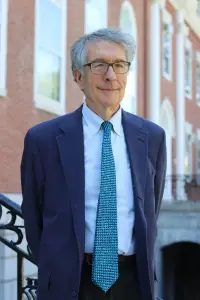 Howard Gardner, Ph.D.
© Harvard Graduate School of Education
Howard Gardner, Ph.D.
© Harvard Graduate School of Education
Howard Gardner: I distinguish between two kinds of goodness. One is how it is that we relate to people whom we know, people in the neighborhood, family, relatives, friends, and so on. And the other is our relationship in the workplace to challenges that we face, and where we have to decide the right thing to do—and that’s often very difficult.
What I have focused on with my colleagues for over 30 years is what it means to do “good work.” Initially, working with psychologists Bill Damon and Mike Csikszentmihalyi—both roughly age-mates of mine and people whom I was close to for a long time—we interviewed well over 1,000 professionals in nine different professions. This was in the United States, roughly from 1995 to 2005.
Since then, with my colleagues at a research center called Project Zero, we’ve interviewed many more people. And the nice thing is that after having done this for a decade and read many, many transcripts and talked to many, many people, we have concluded that “good” has three elements.
ALE: What are the three elements of “good work”?
HG: It’s excellent, it’s engaging, and it’s ethical.
Let’s take a worker. Let’s say it’s a doctor or a lawyer or a journalist. First, the person needs to be excellent. The person needs to know the stuff that requires them to do surgery or to argue a case or to cover an event.
Second, it’s really important if you want to be a good worker to be engaged. If you just count the hours each day until it’s over, and you can’t wait until the weekend or whatever the holidays are, then you’re not engaged. The engaged person basically looks forward to work. That doesn’t mean they don’t like holidays. They might. It doesn’t mean that they don’t do things on the weekend. But come Monday morning, their challenges are there, and they want to be able to meet them.
One of the many groups we talked to were K–12 educators. We found that one of the things that kept teachers going when they were in a very tough situation was having some kind of belief system that sustained them (often a religious system). Especially when the environment is very challenging, you need to have something that motivates you to go to work, that engages you.
Then the final thing, which our own research has really focused on the most, is being ethical. You can be very excellent in your field. You can know what you’re doing. You can be very engaged. You can look forward to going to work, whether you’re a doctor or a journalist. But if you’re not ethical, then you’re not doing good work.
If you pick up either the New York Times or the Wall Street Journal, politically, they are not on the same page. But you read in such well-edited publications about people who know better, but who are cutting corners or doing things that are strictly speaking illegal, or that would be considered illegal by anybody.
So, what we talk about in this is a good mnemonic: the 3 Es intertwined—excellence, engagement, and ethics. If you said, “Howard, what does it mean to be a good worker, a good citizen?,” I would simply say that person knows their stuff, cares about it, and tries to do the right thing.
ALE: How can professionals think more together about ethics in their respective roles?
HG: There are very few ethical dilemmas which are best solved by just sitting by yourself and thinking about the dilemma. Even though people like me, who are professors, often find that internal dialogue easier, you really need to have people whom you trust, an environment that you trust, where you can think about the different options. Even if you’re Moses or Christ, it’s helpful to have somebody else to test it on, rather than to assume that you know better.
First, you have to define the problem; then you have to discuss the problem; then you have to debate and figure out the various sides; then you have to decide. Finally, and very importantly, you have to debrief. Because in any ethical conundrum, you might have made a mistake, you might not have done the right thing. And the question is, how can we learn from that?
Looking at myself, I think some of the mistakes I’ve made were when I didn’t take enough time to test the waters with others and to let them criticize me, and to try to learn from that, rather than assuming, “Well, I’ve done this for a while. I know it. I know the best thing.”
When we look to leaders at work, it’s good to exude confidence. You don’t want to look uncertain, but the confidence should be based on having done your homework and having thought about it and conferred and consulted with people and taken feedback seriously. And if you decide not to follow the feedback, have a good reason for that decision.
ALE: Do you experience virtual spaces and places where educators can come together and do this work? Where they can get emotional support, but also “critical friend” support?
HG: Well, I’m going to give my personal view here, which is not the view of many people I work with. I think it’s really important to be at work—and by that I mean physically at work. If people know each other very well, then Zoom or other kinds of communications can be effective. But especially when someone is relatively new in the job, and when the job is changing quickly, there’s really not a good substitute for being there, for having coffee, for going out to lunch or having a drink together or meeting at the Xerox machine.
I’m not in a majority here. I’m unusual in the academy (that means colleges and universities) because I’m kind of a generalist, and I move from one area to another, and I love environments where people from different disciplines get together. I belong to clubs and organizations where they deliberately have historians and biologists and musicians and so on. Much of the academy now is the opposite. It’s more and more siloed.
Even if you know a lot of people, if they’re too similar to you, it doesn’t advance the notion of dealing productively with complicated issues. Because I’m a generalist, I’m lucky I know people in different fields, and they are willing to tolerate me even if I don’t know much about a topic. I love the curiosity inherent in that, and then the challenging of oneself. I would think that we could have richer discussions of ethical dilemmas with people who think differently and come from different disciplines, right?
“If you said, 'Howard, what does it mean to be a good worker, a good citizen?,' I would simply say that person knows their stuff, cares about it, and tries to do the right thing.”
ALE: How have you and your colleagues at Harvard made ethics and “good work” more concrete and learnable for both teachers and students?
HG: One of the transformative experiences in my life was being hired in 1967 to be a founding member of an organization called Project Zero at the Harvard Graduate of Education. Over nearly six decades, we’ve had hundreds of different projects.
First, we’ve been working with colleges and universities for almost 15 years now on missions that have something to do with character and ethics. Second, a team has created a curriculum on doing good work and good citizenship, which is basically for secondary schools, but it’s used in some middle schools. It’s also translated and used in other countries.
Third, we’ve launched a project called The Good Starts project. It begins with the realization that in America, in early childhood, so much of life is about “I,” and that’s not good for the world. It may not even be good for the child. So, we’ve been trying to study the emergence of “I,” “we,” and “they” in the United States, and compare this trio of categories with other parts of the world.
We’ve worked a great deal with pre–K schools in Northern Italy where almost everything is group work, and there’s no real belief that “I” precedes “we.” Indeed, it’s the way that the school works as a community that’s important. And there are places in Africa where they don’t have words for “I”; everything is “Ubuntu” (“I am because you are”), which is working with other groups. In Japan, they often have two year olds who walk on errands around the city without any help. On the other hand, when there’s a fight that breaks out for young kids, teachers let them fight.
I’m not trying to do anthropology in five minutes. I’m saying that how one begins to deal with oneself, and other people, starts very early. In this country, we’re quite biased toward my child getting into the right school and getting the right job, but we’re trying to learn from the way societies all over the world relate to personal identity, group identity, and civic identity.
I think that the Good Starts work that we’re doing is important. In every society, people tend to think that the way that they treat young people is the right way, and they’re not aware of the very different approaches that you can take with a young child so that they learn to be part of a community, because you can’t really be a good worker or a good citizen if you’re only promoting yourself.
ALE: Considering current threats to our democracy, what would you advise us as citizens, educators, and good workers?
HG: It may well be that what worked in the United States 100 years ago or 50 years ago isn’t working anymore. And the same might be true about Hungary or England or China or India. You’d have to look at each place and say what’s working and what’s not working. But rather than saying there’s nothing to learn from other places, I think the better question to ask is, “What can we learn from other places, which we haven’t thought about enough and which might allow us to do a much better job?”
I think that we need to understand the different beginning points of education in different parts of the world, and not to assume that the way we’re doing it is necessarily the only way to do it, and to try to learn from the examples elsewhere. It’s not one way. It’s reciprocal.
My own teacher, Jerome Bruner, who was a great psychologist and educator, created a social studies course for fifth and sixth graders. And the course asked three questions: What makes human beings human? How can we get that way, and how can we be made more so?
The Good Project, The Good Play project, The Good Starts project, and, indeed, multiple intelligences are all efforts to make us more human, to bring out the best we can in the species before it’s too late. The clock is ticking loudly. It’s not just ticking in the United States; it’s ticking in many parts of the world. And those of us who still believe that there is such a thing as good work and who want to try to have people become good citizens need not assume we know all the answers, but try to learn as much as we can from other examples, and then try to put them together in ways that make sense for our society today.


Comments