Raising Happiness


Back-to-School: Play and Academic Success

August 18, 2008 | The Main Dish | 9 comments

[Note: If you subscribe to get postings by email, I apoligize for the emails you got this weekend. We're still trying to figure out why they went out (clearly my area of expertise is NOT why feedburner does what it does). Big thanks to our awesome volunteers and web people, Seamus, Alexandra, and Dave, for all your work on this blog. As you can see, I am now officially back from my summer blogging hiatus. Thank you for coming back, too! I welcome your suggestions and comments.]

Why I'm Going to *TRY* Not to Over-schedule My Kids This Year

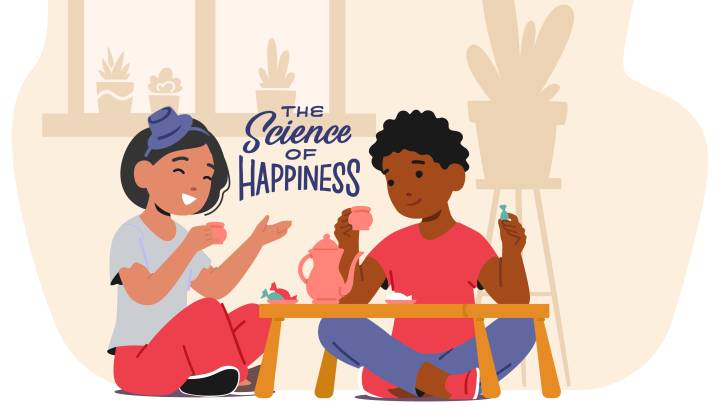
School starts next week, and so our kids will be back to a day of structured learning. But this year Fiona won't be taking Spanish and Mandarin and knitting and drama. Most days after school she and Molly [who starts Kindergarten!!], are going to walk home, hopefully with the neighborhood kids, and hang around and play.

Why?

I keep reading the statistics about how kids are spending less time playing, both indoors and out, and about how they are spending more time in organized activities (particularly athletics). Over the last two decades, children have lost 8 hours of free, unstructured, and spontaneous play a week.

Spending more time in front of the TV and in piano lessons and less time playing in the backyard is changing kids' cognitive and emotional development. We know that children's capacity for self-regulation—their ability to control their emotions and behavior and to resist impulses—is much worse than it was 60 years ago. In one study, today's 5-year-olds had the self-regulation capability of a 3-year-old in the 1940s, and today's 7-year-old barely approached the level of a 5-year-old 60 years ago.

The benefits of play are great – more far-reaching than just helping kids learn to self-regulate. Child-led, unstructured play (with or without adults) leads to intellectual, physical, social, and emotional well-being. Unstructured play helps children learn how to work in groups, to share, to negotiate, to resolve conflicts, to regulate their emotions and behavior, and to speak-up for themselves.

And it turns out that sacrificing play to earlier academics and earlier sports does not necessarily lead to greater success, and might even hinder it. In one study, children attending academic preschools showed no advantage in reading or math achievement over kids who went to play-based preschools—but they did tend to have higher levels of test anxiety, were less creative, and they had more negative attitudes toward school than the kids in play-based preschool.

Three Things to Keep in Mind When Playing with Your Kids

  • Let your kids lead.When we find ourselves saying things like "I like the game you are playing, but why don't you let Sarah be the girl and you be the daddy?" to our kids, we are probably dominating their play too much. Don't correct your kids when they are playing unless they are being unkind. If you notice yourself frowning, sighing or rolling your eyes when your child isn't playing the way that you want him or her too, take a step back and let your child direct the play.
  • Don't play with your kids in ways that bore you. Spend time playing things that you enjoy (while still letting them lead). I love to rough-house with my children, and I can see why it strengthens our bond. But I have a hard time participating in their pretend play without getting bored—so I mostly skip doing that with them. Child-parent play has been virtually unheard of throughout most of human history, and even now about 75% of the world's population would think it odd for a parent to get on the floor to play with a child. So it is perfectly fine for parents to back-off a little bit and let children play on their own or with other children, especially once they are 4 or 5 years old. Kids learn how to entertain themselves this way, and how to get along with other children.
  • Pretend play is particularly beneficial, so make sure kids have ample time to do that. Children with imaginary friends are not crazy or troubled; in fact, research shows that they are actually less shy than other children and more likely to smile and laugh in social situations. Projecting personalities and having make-believe interactions with stuffies, toys, or imaginary companions is a healthy way for kids to develop the skills they need to focus their attention and get along with other children. Dramatic pretend play with two or more children stimulates social and intellectual growth in children, which in turn affects the child's success in school.

The more complex imaginative play is, the better. Make sure that kids have enough time: a half hour is the minimum. Play that lasts several hours is better. Encourage kids to use symbolic props rather than prefab toys – sticks for fairy wands and boxes for cars or houses.

Older children can be encouraged to participate in drama classes and clubs.

Chico Kids are Back-to-School

A note about privilege: Make no mistake—I know that it is a privilege for my kids to be able to walk home from school and "just play." They can do it because I have a lot of flexibility in my job and because we live in a really safe neighborhood with sidewalks. Most kids no longer live in neighborhoods where a 5 and a 7 year-old can just take the dog for a walk without an adult. Play is disappearing from our children's lives not just because we value it less in our no-child-left-behind efforts to help our kids excel at school, but because as a society we aren't doing enough to protect it as a possibility for all kids.

What are your thoughts about scheduling your kids? Are your kids over-scheduled? If so, why? If not, do you ever feel guilty that they aren't enrolled in more activities? What do you think a good balance is for your kids?

© 2008 Christine Carter, Ph.D.

Join the Campaign for 100,000 Happier Parents by signing this simple pledge.

Become a fan of Raising Happiness on Facebook.

Follow Christine Carter on Twitter

Subscribe to the Happiness Matters Podcast on iTunes.

Sign up for the Raising Happiness CLASS!

Related posts:

Related links from Greater Good magazine:

  • Can We Play? Play is essential to positive human development, but kids are playing less and less, says psychologist David Elkind. What can we do to build a new culture of play?

  • Games Animals Play Animal play is serious business, say scientists Lee Alan Dugatkin and Sarina Rodrigues.

  • Confessions of an Anxious Parent Are today's parents afraid to let their kids play? Jill Suttie tries to strike a balance between safety, freedom, and success.

  • The Wild Ones Adults have always tried to control children's play. But Howard P. Chudacoff argues that the kids will always win.

  • Playing the Blame Game Video games stand accused of causing obesity, violence, and lousy grades. But new research paints a surprisingly complicated picture, reports Jeremy Adam Smith.

  • With Friends Like These… Marjorie Taylor and Alison B. Shawber explain what imaginary friends can reveal about the kids who create them.

  • You're It! Play isn't just for kids, reports Karen Solomon.


Like this post?

Here's what you can do:

Donate


Buy the Book!

Learn more about the science of raising happy kids in Christine Carter's popular book.

BUY


Raising Happiness


Raising Happy Kids on Summer Vacation

July 3, 2008 | The Main Dish | 0 comments

Happy summer! I hope all of your families are settling into a summer routine that is more lazy than crazy. Personally, I find it really difficult not to super-schedule my kids into a different camp each week now that school is out (so that I can get a little work done!). If you are like me and need a little reminding that unscheduled time to play is critical for our kids' health and happiness, check out the last issue of Greater Good magazine, which has several articles about the benefits of old-fashioned play.

I'll be back in late August with more information and some new videos about how and why we should resist over-scheduling our kids once school starts again. We'll be working on the blog all summer, so please post your suggestions for improvements and future topics. If you have a burning question about raising happy kids and want to know what the research says, now is the time to raise it!

If you are new to the blog—or a busy parent who missed a few weeks—I hope you'll check out some of the posts below. Or watch a video!

Changing Bad Habits Into Good Ones
Happiness Habits How-to, Part I
Habits How-to, Part II
Habits How-to, Part III
Habits How-to, Part IV

Family Meals
Making Dinnertime Worth the Effort
What Kids Learn During Dinner

Fathering
Are Dads as Essential as Moms?
How Do We Get Dads to be More Involved?
Is a Divorced Dad as Important as Other Dads?

Forgiveness
Forgive and…Feel Happier

Gratitude
Teaching Gratitude
How Not to Raise an Ungrateful Brat

Grown-up Relationships
Your Love Life, Your Child's Happiness
How to Fight
5 hours to a Better Relationship
Your Paltry Sex Life

Happiness is a Skill
Introduction: Emotional Literacy & Raising Happy Kids

Mothering
Confessions of a Selfish Mother
How to be a Happy Mom

Optimism
The Benefits of Optimism
Raising Optimistic Kids

Success
The Psychology of Success
Achievement Doesn't Matter
The Right Way to Praise Kids
Let Your Kids Fail


Did you catch my blogversation series with Kelly Corrigan?

Introduction: Emotional Literacy & Raising Happy Kids
The Psychology of Success
Achievement Doesn't Matter
The Right Way to Praise Your Kids
Let Your Kids Fail
How Not to Raise an Ungrateful Brat
Materialism v. Altruism During the Holidays
Family Meals are Hugely Important
How to Get the Most Out of Family Dinners

Photo credits: Christina Koci Hernandez for the SF Chronicle

Christine Carter, Ph.D., is a mother of two and the executive director of the Greater Good Science Center at UC Berkeley. Find more tips for raising happy kids at greatergoodparents.org.

Join the Campaign for 100,000 Happier Parents by signing this simple pledge.

Become a fan of Raising Happiness on Facebook.

Follow Christine Carter on Twitter

Subscribe to the Happiness Matters Podcast on iTunes.

Sign up for the Raising Happiness CLASS!


Like this post?

Here's what you can do:

Donate


Buy the Book!

Learn more about the science of raising happy kids in Christine Carter's popular book.

BUY


Raising Happiness


Is a Divorced Dad as Important as Other Dads?

June 23, 2008 | The Main Dish | 1 comment

Do I Have to Live with my Kids for Them to Reap the Benefits?
Last week I heard from dads across the spectrum. One emailed me saying my last posting was "BS," because I was just "feeding into the same old stereotypes of the 1960s" by reporting on research that shows that dads do only 30% of the housework and childcare. My colleague at the Greater Good Science Center Jeremy Adam Smith wrote here about the amazing biological changes which can take place in men when they become fathers. And a divorced dad (I'll call him D.D.) worried that his kids wouldn't reap the same benefits of his involvement because he doesn't live with them. He and their mother have decided that their kids should live in one house—their mother's—instead of going back and forth between houses, so while D.D. sounds pretty involved to me, I understand his concern that his influence is limited.

When I look at the research, I don't think D.D. need worry. Fathers who don't live with their children can have just as big an impact on the well-being and success of their children as residential fathers—if they maintain strong ties with their kids. Unless the relationship between parents is marked by extremely high conflict, kids consistently do better following a divorce when they are able to maintain meaningful relationships with both parents.
subscribe

D.D. gets along well with his kids' mother, whom he considers his parenting partner—this is key. The best predictor of the quality of a father's relationship with his kids is the quality of his relationship with their mother. When parents who live apart can cooperate effectively, father-child contact tends to increase, which in turn predicts better parenting and stronger ties between non-residential fathers and their children.

It also matters a lot HOW dads parent. Children do better across the board when their fathers are involved in a way that is not too permissive and not too strict. These "authoritative" fathers are engaged in:

  • Setting and enforcing rules and providing consistent discipline
  • Monitoring and supervising their kids
  • Helping with homework
  • Providing advice and emotional support
  • Praising children's accomplishments.

On the other hand, participating in "leisure activities"—like going out to dinner, buying kids things, or seeing movies together—does not tend to influence children's well-being. D.D. will do well to stay involved with the nitty-gritty of fathering instead of becoming someone who just takes the kids on weekend outings.

Last but certainly not least, one of the most important ways that non-residential fathers contribute to their children's development and well-being is to pay child support. The amount of child support received influences a child's:

  • School success and cognitive test scores
  • Social skills
  • Emotional well-being
  • Behavior problems
  • Health and nutrition

The amount of child support paid by a non-residential father impacts children hugely, even after the influences of maternal income, frequency of contact between the father and child, and conflict between parents are taken into consideration.

What exactly is a "positively engaged father"?
A couple of weeks ago I summarized all the great benefits of having a "positively engaged father". What exactly does that mean? Researchers assess father engagement in a wide variety of ways, usually as a function of how much time a father spends doing things with his children. Father involvement also tends to be measured by assessing the quality of the father-child relationship. Can the relationship between a father and child be described as "sensitive, warm, close, friendly, supportive, intimate, nurturing, affectionate, encouraging, comforting, and accepting"? (Allen and Daly, 2007).

A broader conceptualization of fatherhood (Palkovitz, 1997) includes several different dimensions that dads can be positively involved (below). Good dads will draw from many of these different dimensions, though which ones dominate are likely to change over time as the developmental needs of his children change. Dads who want to become more positively involved with their children should try some of the following activities:

    1. Talking with them and practicing being a good listener
    2. Teaching them (role modeling, encouraging activities and interests)
    3. Monitoring them (when they are with friends, doing homework)
    4. Running errands with them
    5. Participating in basic caregiving (feeding, bathing)
    6. Engaging in shared interests (reading together, throwing a baseball, playing)
    7. Simple being available to talk, drive, help
    8. Planning with them (activities, birthdays)
    9. Showing affection and love
    10. Providing emotional support and encouraging them

Given this multitude of ways that a dad can be positively involved—none of which is contingent on co-residence—I think that D.D.'s positive influence is likely to be great!

Christine Carter, Ph.D., is a mother of two and the executive director of the Greater Good Science Center at UC Berkeley. Find more tips for raising happy kids at greatergoodparents.org.

Join the Campaign for 100,000 Happier Parents by signing this simple pledge.

Become a fan of Raising Happiness on Facebook.

Follow Christine Carter on Twitter

Subscribe to the Happiness Matters Podcast on iTunes.

Sign up for the Raising Happiness CLASS!


Page 167 of 176 pages ‹ First  < 165 166 167 168 169 >  Last ›

Subscribe to this Blog

Every time a new Raising Happiness post is published, get it as an email or via RSS feed.

Subscribe


Most...


Is she flirting with you? Take the quiz and find out.
image

Greater Good Articles

  
  • Why Compassion in Business Makes Sense

    April 15, 2013

    Emma Seppala explains how compassionate workplaces are good for employee health and the corporate bottom line.

  • How to be a Happy Working Dad, Part One

    March 27, 2013

    A new report finds that fitting work with family isn't just a women's issue. Jeremy Adam Smith offers 10 tips for helping fathers to navigate a changing landscape at home and on the job.

  • When Getting Angry Makes You Happy

    April 2, 2013

    A new study shows how seeking happiness at the right time may be more important than seeking happiness all the time.


Twitter

@raisinghappines: East Bay folks -- I'll be speaking at the LOPC this Sunday. Hope to see you there! http://t.co/UVwvlT6N
@raisinghappines: South Bay folks -- hope to see you at the San Jose event tomorrow! Tell your friends. http://t.co/2Hn8yFc6
@raisinghappines: Check out Janine Kovac's guest post -- it'll tug at your heartstrings. http://t.co/B6uXoWlz
 

Greater Good Live


The Evolutionary Roots of Compassion

The Evolutionary Roots of Compassion

Dacher Keltner explains why Darwin thought compassion is humans’ strongest instinct.

Watch
 

The Greater Good Guide to Mindfulness

The Greater Good Guide to Mindfulness

This invaluable resource, a special benefit for GGSC members, offers insight into what mindfulness is, why it’s important, and how to teach it.

Get the Guide
 

Greater Good Summer Institute for Educators

University of California, Berkeley
Clark Kerr Campus
Friday, June 28 - Wednesday, July 3, 2013
Greater Good Summer Institute for Educators

The GGSC’s six-day Summer Institute will equip educators with social-emotional learning tools that will benefit both students and teachers. Registration is now closed.

» All Events


Sponsors

The Quality of Life Foundation logo Special thanks to

The Quality of Life Foundation for its support of the Greater Good Science Center