In the 1960s, the late Yale psychologist Stanley Milgram conducted one of psychology's most famous and controversial experiments. He wanted to test how willing the average person would be to obey an authority figure, even when instructed to perform morally dubious acts that violated their conscience. Inspired by recent revelations of Nazi war crimes–his first study began around the time that Adolf Eichman went on trial–Milgram wanted to test the idea that, if placed in certain situations, many seemingly good people would be capable of evil deeds.
 © ABC News
Study participants were instructed to give a shock to someone in another room each time that person failed to get an answer right on a memory test. (The shocks weren't real, but the participants didn't know that.) The "shocks" supposedly got more intense with every wrong answer; when participants would hesitate, someone in a lab coat would instruct them to proceed. Before the experiment, Milgram's colleagues guessed that 1-2 percent of participants would go all the way to administer the most lethal shocks. His actual results were, well, shocking: 62.5 percent of the participants were willing to keep giving shocks until there were no more shocks to give, even after the shock recipient begged, pleaded, and then become eerily silent.
Milgram's experiment is very relevant to our latest issue of Greater Good, with its focus on "the psychology of the bystander." We wanted to explore why moral people, often influenced by group dynamics, often don't take moral action when it's called for, especially when it involves coming to the aid of someone in distress; we also wanted to try to understand the psychological and social factors that do induce some people to perform altruistically and even heroically when put to the test.

Of course, we were curious to see how we'd hold up in many of the scenarios described in our issue–like seeing people beaten, bullied, or just in need of some spare change–and we also wondered whether people today would in general fare any better than Milgram's subjects did in the '60s.
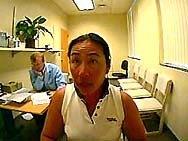
ABC News took it one step further: They worked with a psychologist at Santa Clara University to recreate Milgram's methods, albeit in a slightly more ethical fashion.
They ran their story about the results last month, just as our bystander issue was coming out. Read their story to check out their results. But in a nutshell: not much as changed.



Comments